They are the two K-beauty sunscreens people mention most, they come in the same 50 mL size, and they cost about the same. So which one should go in your cart?
This guide compares Beauty of Joseon Relief Sun and SKIN1004 Hyalu-Cica Water-Fit Sun Serum using only published information: ingredient lists, the brands' own lab figures, US Drug Facts labels, and current retail prices. We haven't worn either one for this article, so we don't make any "after two weeks on my skin" claims. Every number has a source listed at the bottom.

Beauty of Joseon Relief Sun: Rice + Niacinamide, 50 mL. Image: Beauty of Joseon official store
The Short Answer
- Dry or normal skin, or you want SPF that doubles as a moisturizer: Beauty of Joseon Relief Sun.
- Oily, combination, or easily irritated skin, or you want a fast, light layer: SKIN1004 Hyalu-Cica Water-Fit Sun Serum.
- UV protection: essentially a tie on the Korean-market formulas. They use the same four filters.
- Price: also close to a tie, at roughly $17–$19 for 50 mL.
- The catch US shoppers miss: the SKIN1004 tube sold with a US Drug Facts panel uses a completely different filter set, and the Korean Relief Sun is not a US-registered sunscreen. Details below.
Both Products at a Glance
| Item | Beauty of Joseon Relief Sun | SKIN1004 Hyalu-Cica Water-Fit Sun Serum |
|---|---|---|
| Full product name | Relief Sun: Rice + Niacinamide (formerly Rice + Probiotics) | Madagascar Centella Hyalu-Cica Water-Fit Sun Serum |
| Size | 50 mL (1.69 fl oz) | 50 mL (1.69 fl oz) |
| Rating (Korean version) | SPF50+ PA++++ | SPF50+ PA++++ |
| Texture type | Light cream | Watery serum |
| Signature ingredient | Rice extract plus grain ferments | Centella asiatica extract (9,800 ppm) |
| Brand-stated skin type | "Sunscreen for dry skin" (brand page) | Combination, oily, sensitive |
| Separate US OTC version? | No. The US product is a different sunscreen (Day Dew SPF 50) | Yes. "Water-Fit Sun Serum UV," Broad Spectrum SPF 50 |
| Water-resistance claim | None | None on the Korean version; the US label says to use a water-resistant sunscreen when swimming |
Same Four UV Filters (Korean Versions)
This is the most useful fact in the whole comparison. When you put the two Korean-market ingredient lists side by side, the sunscreen filters match exactly:
| Filter (INCI) | Trade name | Covers | Relief Sun | SKIN1004 |
|---|---|---|---|---|
| Diethylamino Hydroxybenzoyl Hexyl Benzoate | Uvinul A Plus | UVA | Yes | Yes |
| Ethylhexyl Triazone | Uvinul T 150 | UVB | Yes | Yes |
| Methylene Bis-Benzotriazolyl Tetramethylbutylphenol | Tinosorb M | UVA + UVB | Yes (labeled nano) | Yes |
| Diethylhexyl Butamido Triazone | Iscotrizinol (Uvasorb HEB) | UVB | Yes | Yes |
All four are modern, photostable filters that are widely used in Korea and the EU. Matching filter names do not prove matching filter amounts, though, because neither brand publishes percentages. That makes the next point especially useful.
The Lab Numbers Beauty of Joseon Actually Publishes
Most comparisons stop at "both are SPF50+." Beauty of Joseon goes further and prints its raw test results on its own product page. It says Relief Sun was tested in two separate labs:
- Korea lab: SPF 52.5 ± 5.8, UVA-PF 16.1 ± 2.4 (PA++++)
- Spain lab: SPF 63.1 ± 0.6, UVA-PF 19 (PA++++)
Two points stand out. First, both results clear the SPF 50 threshold, although the Korean result sits fairly close to it once you account for the ±5.8 margin. Second, PA++++ in Korea requires a UVA-PF of 16 or higher, and both labs reported at least that. We could not find comparable per-lab figures published by SKIN1004 for its Korean sun serum, so on this one point Beauty of Joseon is the more transparent brand.
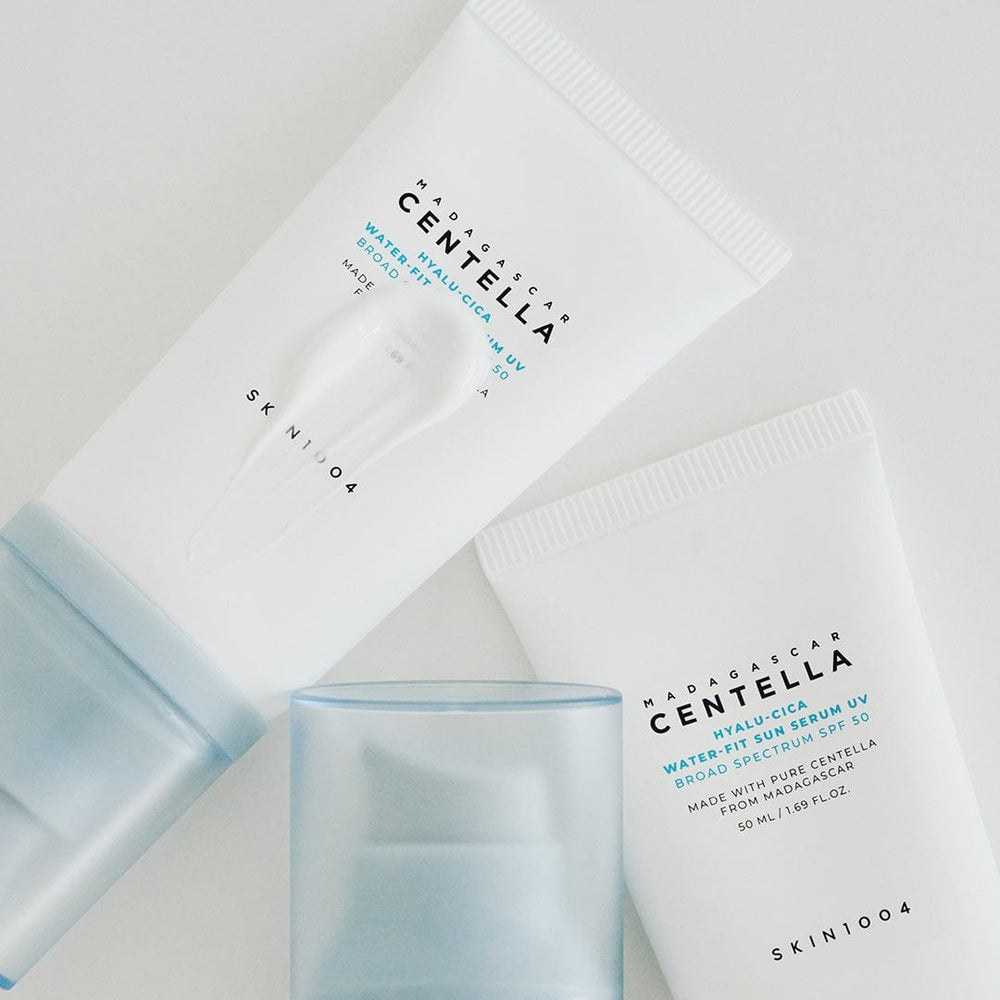
SKIN1004 Hyalu-Cica Water-Fit Sun Serum UV, 50 mL. Image: SKIN1004 official store
Where They Really Differ: The Skincare Around the Filters
Beauty of Joseon: Rice and Ferments
The Relief Sun formula is built on rice extract. Older packaging advertised "30% rice extract," and the brand page still uses that phrase. Supporting it is a group of grain and plant ferments, including Lactobacillus/Rice Ferment, Saccharomyces/Rice Ferment Filtrate, and Bacillus/Soybean Ferment Extract, plus niacinamide. The product was recently renamed from "Rice + Probiotics" to "Rice + Niacinamide." Beauty of Joseon says the formula and size did not change, so listings under either name should be the same sunscreen.
In practice, this gives you a cushiony, moisturizer-like layer. That is exactly why the brand labels it a sunscreen "for dry skin."
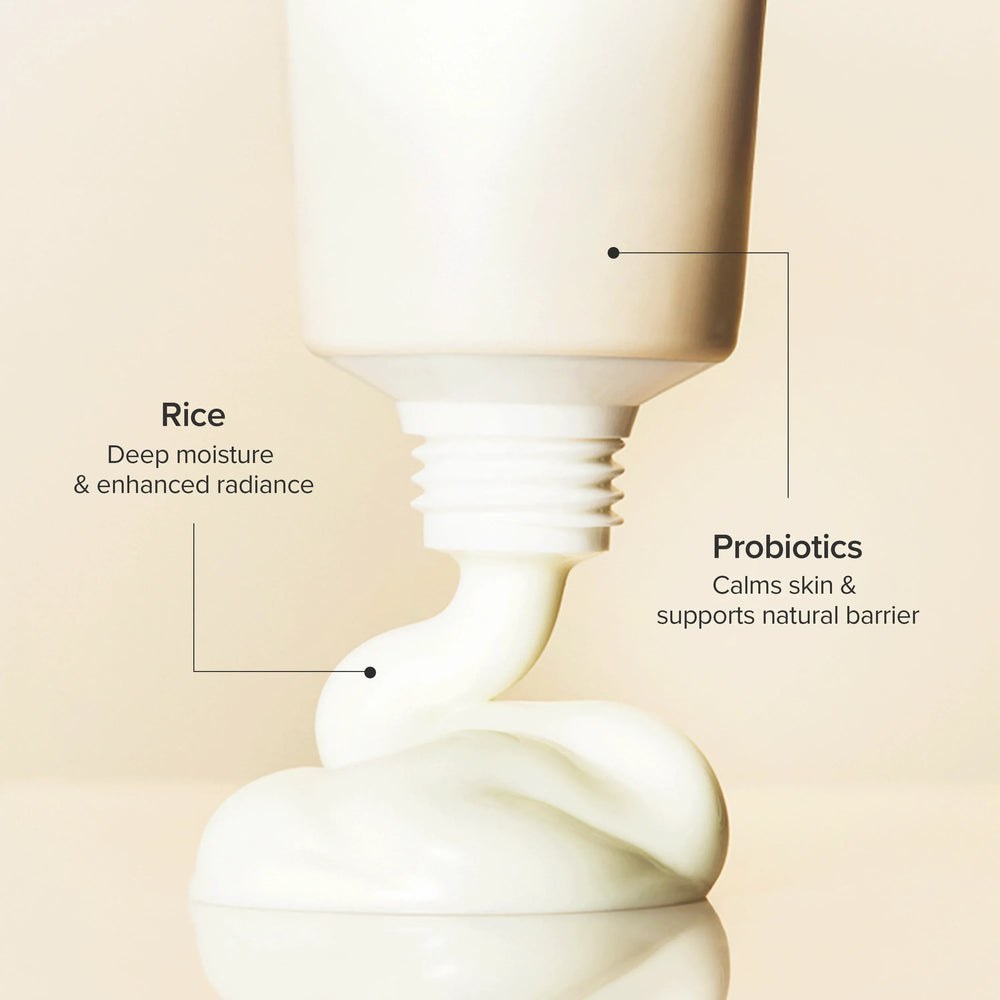
Relief Sun texture shot from the brand. Image: Beauty of Joseon official store
SKIN1004: Centella and a Light Hydration Base
SKIN1004 builds its formula around Madagascar centella asiatica, listed at 9,800 ppm (just under 1%). Centella is the "cica" ingredient that is popular for calming redness-prone skin. The formula also includes a handful of botanical extracts and a small amount of sodium hyaluronate. That last ingredient is low enough that the "Hyalu" in the name is more branding than a dose to rely on.
The result is a thin, essence-like serum that spreads fast and leaves less on the surface, which oily-skin users tend to prefer.
Formula Side by Side
| Category | Beauty of Joseon | SKIN1004 |
|---|---|---|
| Hero active | Rice extract | Centella asiatica (9,800 ppm) |
| Support actives | Grain ferments, niacinamide | Botanical extracts, sodium hyaluronate (trace), niacinamide |
| Main skincare angle | Moisture, brightening | Soothing, lightweight hydration |
| Missing compared with the other | No centella | No ferments; lighter on moisture |
| Fragrance in INCI | Not listed | Not listed |
Texture, Finish, and White Cast
The brands' descriptions and the most-viewed reviews agree on the basics:
- Relief Sun applies like a light lotion and dries to a soft, dewy finish. On dry skin that reads as a glow. On very oily skin in humid weather, it can look shiny by midday.
- SKIN1004 applies like water and sinks in faster, with a fresher, less dewy finish.
- White cast: neither relies on zinc oxide or titanium dioxide, so neither should leave a chalky mineral cast. Tinosorb M is a particulate filter and can occasionally leave a faint tint on deep skin tones. The video below shows both on deeper skin.
Watch: Both Sunscreens on Deeper Skin
If white cast is your main concern, this side-by-side wear test is more useful than any written description:
Which One Fits Your Skin Type?
| Skin type or need | Better fit | Reason |
|---|---|---|
| Oily | SKIN1004 | Thinner, faster-absorbing, less surface shine |
| Dry | Beauty of Joseon | Creamier base that works like a moisturizer |
| Sensitive or redness-prone | SKIN1004 | Centella base and a shorter extract list |
| Combination | Either | Same filters, so choose by preferred texture |
| Dullness or uneven tone | Beauty of Joseon | Rice extract plus niacinamide focus |
| Under makeup | SKIN1004 | Lighter layer, less slip under foundation |
| Winter or dry climate | Beauty of Joseon | More cushion against dryness |
The US-Version Catch (Read This Before Ordering)
In the US, sunscreen is regulated as an over-the-counter drug. Products need a Drug Facts panel and can only use FDA-listed active ingredients. That affects both brands differently:
- SKIN1004 "Water-Fit Sun Serum UV" (US): its DailyMed label (updated August 30, 2026) lists avobenzone 2.7%, homosalate 13.6%, octisalate 4.5%, and octocrylene 9%, labeled Broad Spectrum SPF 50. That is a different filter system from the Korean serum. The comparison table above applies only to the Korean version.
- Beauty of Joseon Relief Sun: none of its four filters is on the FDA's US sunscreen active list. (In June 2026 the FDA added bemotrizinol, known as Tinosorb S, but none of Relief Sun's filters.) The brand's US-compliant sunscreen is a separate product, Day Dew SPF 50, with an avobenzone/homosalate/octisalate/octocrylene panel. On Amazon.com, Relief Sun listings are often third-party sellers rather than the brand itself.
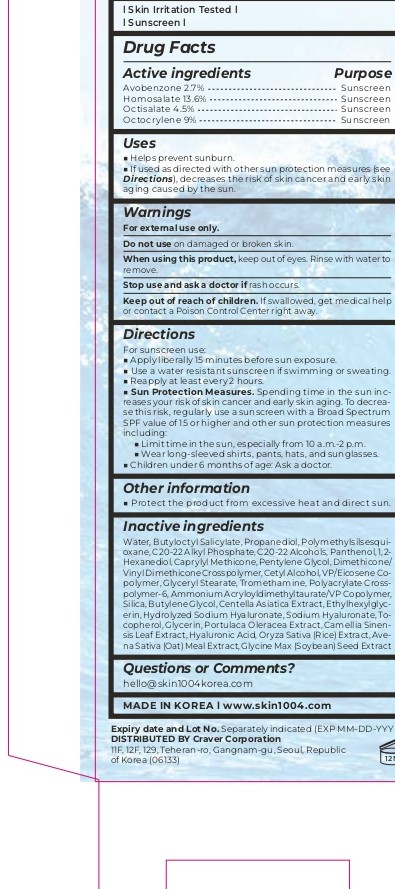
Drug Facts panel of the US SKIN1004 Water-Fit Sun Serum UV, showing four different actives. Source: DailyMed / U.S. National Library of Medicine (carton artwork)
So if your goal is "the same four filters, compared fairly," you need the Korean SKIN1004 tube. If your goal is a US-labeled product, the fair matchup is actually SKIN1004 Sun Serum UV vs Beauty of Joseon Day Dew.
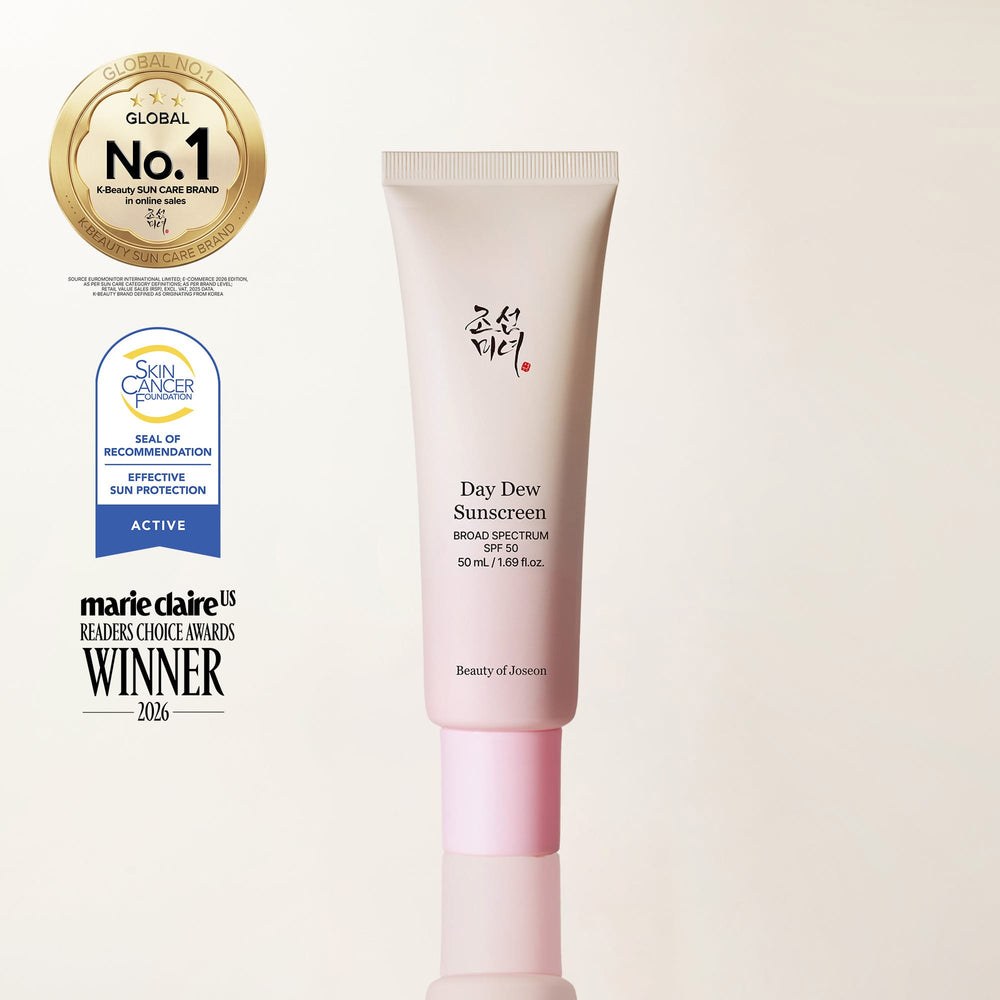
Beauty of Joseon Day Dew Sunscreen, the brand's separate US-labeled SPF 50. Image: Beauty of Joseon official store
Price and Value
| Where | Beauty of Joseon Relief Sun (50 mL) | SKIN1004 Water-Fit Sun Serum (50 mL) |
|---|---|---|
| Brand's own store | About $18 single / $27 for 2 (global store) | $17.10 (US "UV" version) |
| Amazon.com | About $17.90–$18.80 (third-party listings) | About $17.40 (list $20.99); 2-pack about $26.80 |
| Approx. price per mL | About $0.36 | About $0.35 |
Prices were checked on October 23, 2026 and change often, especially during sales. Check the live price before you buy.
On price alone, there is no winner. The real cost difference is how fast you go through a tube. Sunscreen only reaches its labeled SPF at about 2 mg/cm², which works out to roughly 1/4 teaspoon (about 1.2 mL) for the face alone. At that rate, one 50 mL tube lasts about six weeks of daily face-only use. Choose the texture you will actually apply generously.
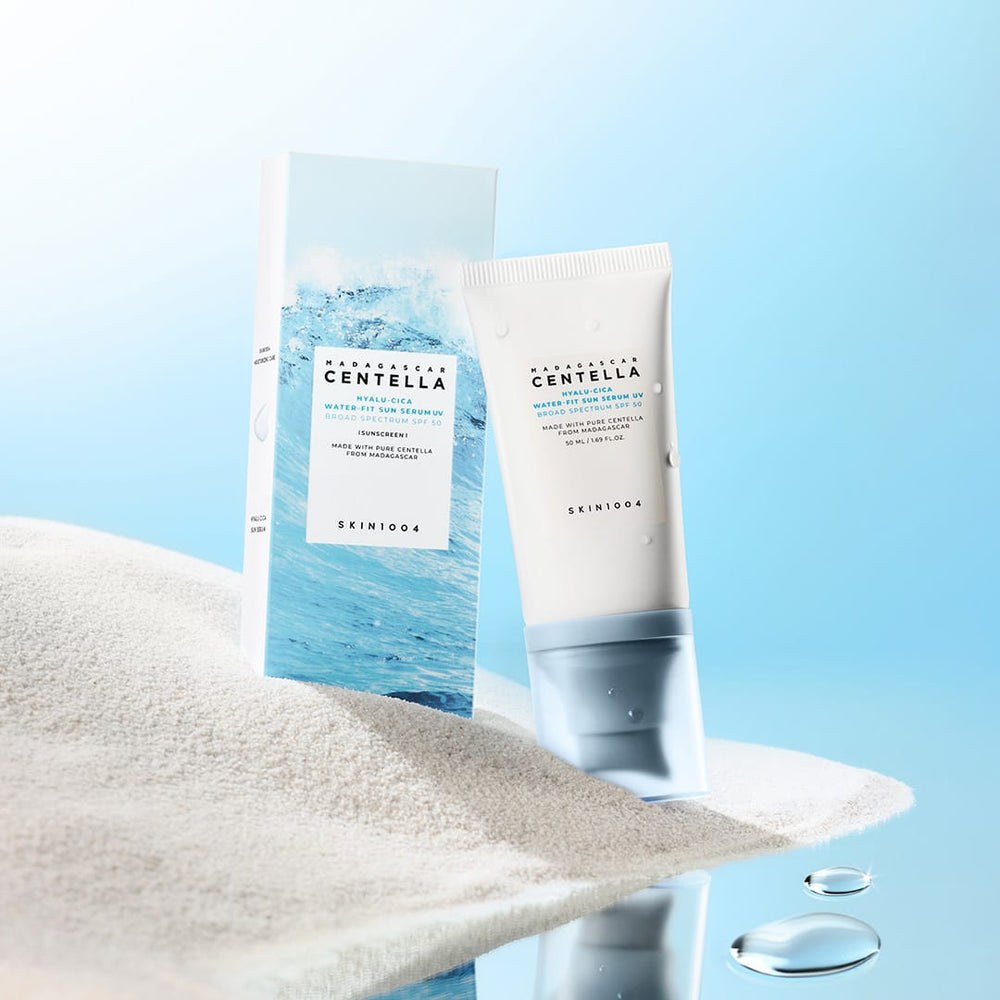
SKIN1004 sun serum and outer box. Image: SKIN1004 official store
Honest Drawbacks of Each
Beauty of Joseon Relief Sun
- The dewy finish can turn into shine on oily skin in heat.
- It is not a US OTC sunscreen, and Amazon listings are often third-party.
- It has several ferment ingredients. If ferments have broken you out before, patch test first.
- It has no water-resistance claim.
SKIN1004 Hyalu-Cica Sun Serum
- It may not feel moisturizing enough for dry skin in winter.
- The hyaluronic acid content is too low to matter much.
- The US version has a different filter set, so Korean-version reviews may not describe what you receive.
- It can pill over a heavy moisturizer.
Buyer's Checklist Before You Order
- ☐ Check the exact name: "Relief Sun: Rice + Niacinamide / Rice + Probiotics" or "Water-Fit Sun Serum" vs "Sun Serum UV."
- ☐ Look for SPF50+ PA++++ (Korean version) or a Drug Facts panel (US version), and decide which one you want.
- ☐ Confirm the seller: the brand store, an authorized retailer, or an unknown third party.
- ☐ Match the texture to your skin: cream (dry/normal) or watery serum (oily/combination).
- ☐ Check the expiry date on arrival. Sunscreen filters degrade over time.
- ☐ Patch test on your jawline for a few days if you're acne-prone or sensitive.
- ☐ Plan on about 1/4 teaspoon for the face and reapply every 2 hours outdoors.
Three Limits of This Comparison
- We compared labels, lab disclosures, and retail data, not our own wear test. Texture notes reflect brand descriptions and widely reported user feedback.
- Filter percentages for the Korean formulas aren't published, so "same filters" does not mean "identical protection on skin."
- Formulas and names change. Beauty of Joseon recently renamed Relief Sun, and SKIN1004 sells region-specific versions. Always read the box you receive.
Final Verdict
If your skin runs dry and you like skipping moisturizer in the morning, get Beauty of Joseon Relief Sun. If your skin runs oily or reactive and you want sunscreen you barely feel, get SKIN1004 Hyalu-Cica Water-Fit Sun Serum. In their Korean versions, the protection is the same four-filter system, so the deciding factor is texture. And if you are in the US, make sure you know which version you are buying.
FAQ
Is Beauty of Joseon or SKIN1004 better?
Neither is better at UV protection, since the Korean versions share the same four filters. Beauty of Joseon suits dry skin and SKIN1004 suits oily or sensitive skin.
Do they really use the same UV filters?
Yes, for the Korean-market formulas: Uvinul A Plus, Uvinul T 150, Tinosorb M, and iscotrizinol. The US SKIN1004 "UV" version uses avobenzone, homosalate, octisalate, and octocrylene instead.
Is Beauty of Joseon Relief Sun FDA-approved?
No. Its filters are not on the FDA's US sunscreen active list. The brand sells a separate US product, Day Dew SPF 50.
Which one is better for oily skin?
SKIN1004. Its watery serum leaves less shine than Relief Sun's creamier finish.
Do either of them leave a white cast?
Neither uses zinc oxide or titanium dioxide, so a chalky cast is unlikely. Tinosorb M can leave a faint tint on some deep skin tones, so watch the wear test above.
Can I wear them under makeup?
Yes. Let either one set for a few minutes first. SKIN1004 is usually the easier base, and Relief Sun may need a light powder on oily areas.
Are they water-resistant?
Neither makes a water-resistance claim. For swimming or heavy sweating, use a sunscreen labeled water-resistant.
How long does a 50 mL tube last?
At the proper face dose of about 1/4 teaspoon daily, roughly six weeks. It goes faster if you also cover your neck or reapply.
Sources
- Beauty of Joseon – Relief Sun product page (lab SPF/PA results, rice extract, renaming): https://beautyofjoseon.com/products/relief-sun-rice-probiotics
- DailyMed – SKIN1004 Madagascar Centella Hyalu-Cica Water-Fit Sun Serum UV label (updated Aug 30, 2026): https://dailymed.nlm.nih.gov/dailymed/drugInfo.cfm?setid=38d8c1c9-86b5-1edd-e063-6394a90aeb47
- SKIN1004 official store – Hyalu-Cica Water-Fit Sun Serum UV: https://skin1004.com/products/hyalu-cica-water-fit-sun-serum-uv
- INCIDecoder – ingredient lists for both Korean-market formulas
- popkr – Korean vs US versions of Beauty of Joseon sunscreen (Day Dew, FDA list incl. bemotrizinol): https://www.popkr.com/guides/korean-sunscreen-us-vs-korean
- Amazon.com – listing prices for both products (checked Oct 23, 2026)
- U.S. FDA – Sunscreen: How to Help Protect Your Skin from the Sun (2 mg/cm² test dose, reapplication)
- YouTube – Keyshana Dupuy, "Korean Sunscreen on Black Girl: Beauty of Joseon Sunscreen vs Skin1004 Sun Serum"
- Images: Beauty of Joseon and SKIN1004 official stores (product photos); DailyMed (label artwork)
Disclosure: radasong.com may earn a commission from qualifying purchases through some links in the future. This article was not sponsored by either brand. It is general information, not medical advice. If you have a skin condition, ask a dermatologist.
Related: Shin Ramyun vs Buldak: Which Korean Ramen Should You Buy?