Both are red, both come from Korea, and both are everywhere on Amazon, but Shin Ramyun and Buldak are two completely different kinds of noodle.
If you are trying to choose between them, this guide uses only published numbers: the makers' nutrition labels, Scoville figures, and the prices listed on Amazon. We have not done a taste test here. Every fact is sourced at the bottom of the page.
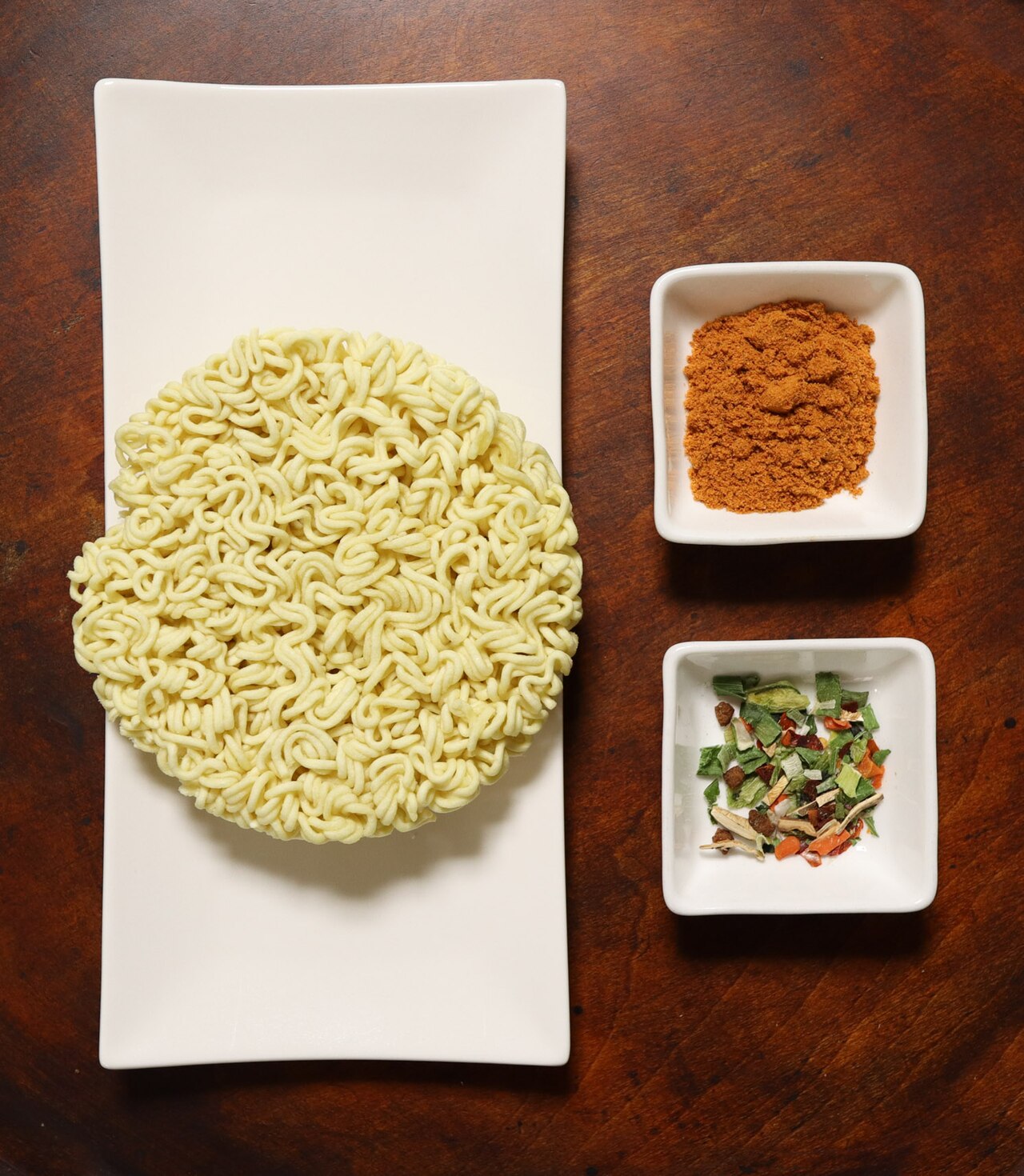
Shin Ramyun packet. Photo: Mobius6 / Wikimedia Commons, CC BY-SA 4.0
TL;DR: The Quick Verdict
- Best first pick for most people: Shin Ramyun. It is a soup, the heat is milder, and it costs less per packet.
- Hotter of the two: Buldak Original, at about 4,404 SHU compared with about 3,400 SHU.
- Best if you want broth: Shin Ramyun.
- Best if you want saucy, stir-fried noodles: Buldak.
- Best Buldak for a beginner: Carbonara, which is milder than the Original.
- Cheapest per packet on Amazon: a Shin Ramyun multipack, at roughly half the per-packet price of a Buldak 5-pack.
Shin Ramyun vs Buldak: What Is the Real Difference?
The biggest difference is the format, not the brand.
Shin Ramyun (Nongshim, launched in 1986) is a soup noodle. You cook it in water and eat it with the broth. On the US label, the flavor base is listed as beef bone extract, mushroom, red chili pepper, and dried vegetable flakes.
Buldak Bokkeum-myeon (Samyang, launched in 2012) is a stir-fried noodle. You boil the noodles, pour off almost all the water, and then toss them in a liquid chili-chicken sauce. There is no broth to drink.
Buldak noodles after the sauce is mixed in. Photo: Jem2013 / Wikimedia Commons, CC BY 4.0
Side-by-Side Comparison Table
| Feature | Shin Ramyun (Original) | Buldak (Original) |
|---|---|---|
| Maker | Nongshim | Samyang |
| Launched | 1986 | 2012 |
| Style | Soup (keep the broth) | Stir-fried (drain the water) |
| Heat (Scoville) | ~3,400 SHU | ~4,404 SHU |
| Packet weight | 120 g | 140 g (4.94 oz) |
| Calories per packet | 520 | 560 |
| Sodium per packet | 1,620 mg (70% DV) | 1,630 mg (71% DV) |
| Cook time | 4.5 min | 5 min + 30 sec stir-fry |
| Typical Amazon pack | 20-pack, about $13.96 (as low as $11.87 with Subscribe & Save) | 5-pack, about $7.48 |
| Approx. price per packet | ~$0.70 | ~$1.50 |
| Amazon rating (at time of writing) | 4.7/5 | 4.5–4.6/5 |
Prices and ratings were rechecked against Amazon listings on October 23, 2026 and change often. Check the live listing before you buy.
Flavor Profile Compared (From the Ingredient Lists)
What Goes Into Shin Ramyun
The US Shin Ramyun label lists beef bone extract, beef extract, mushroom, garlic, onion, soybean paste, and red chili pepper. The flake packet adds bok choy, carrot, mushroom, and green onion.
That makes it a savory, beefy, chili soup. The heat comes through in the broth rather than coating the noodles.
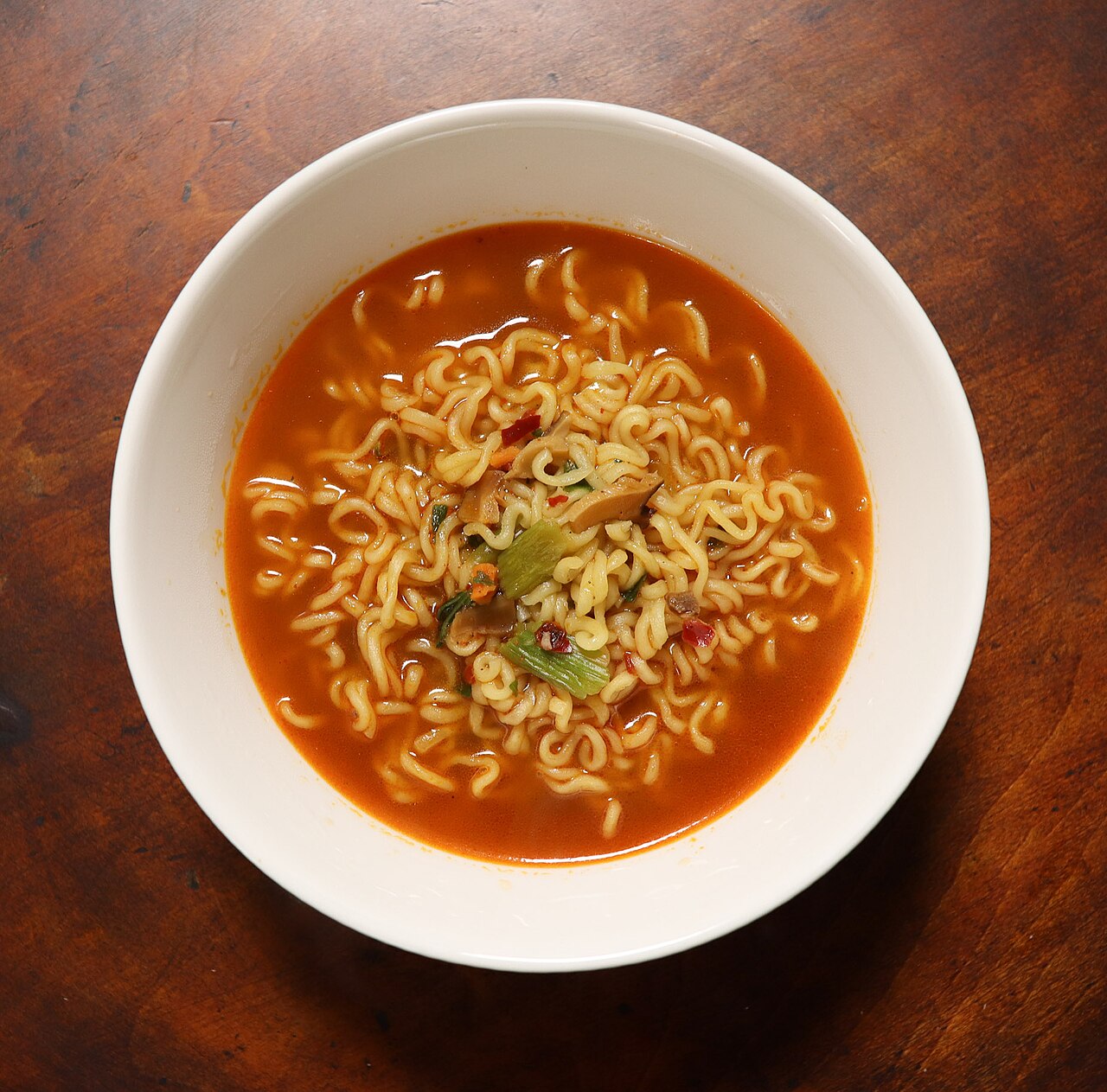
Shin Ramyun, cooked. Photo: Mobius6 / Wikimedia Commons, CC BY-SA 4.0
What Goes Into Buldak
Samyang sells Buldak as a "spicy chicken" stir-fried ramen. The Amazon listing describes a liquid sauce plus a flake packet of seaweed and sesame.
Because you drain the water, all of the sauce stays on the noodles. That is a big part of why it feels more intense than the Scoville gap alone would suggest.
- A sauce-coated, chewy noodle instead of a soup
- A sweet-and-smoky chili-chicken flavor
- The noodle behind the viral "Fire Noodle Challenge"
Which One Is Spicier?
Buldak Original is spicier. Samyang's own figure is about 4,404 SHU. Shin Ramyun is about 3,400 SHU, a number widely reported after Nongshim's 2017 recipe change (it was about 2,900 SHU before).
For a sense of scale, a jalapeño is roughly 2,500–8,000 SHU. Both noodles fall in the mild-jalapeño range on paper.
- Pick Shin if you want heat you can easily handle.
- Pick Buldak if you are looking for heat on purpose.
Broth Bowl vs Saucy Noodle
- Which one is closer to a classic Korean ramyeon? → Shin Ramyun
- Which one is bolder and better known online? → Buldak
The Sodium Detail Most Comparisons Miss
Here is something the top-ranking comparisons skip. The US Shin Ramyun Nutrition Facts panel lists a serving as half a bag (60 g).
The bold number on the panel is 810 mg of sodium (35% DV). But nearly everyone cooks the whole packet, which brings it to 1,620 mg, or 70% of the FDA's 2,300 mg Daily Value, in one bowl. Nongshim USA's own product page lists both figures.
Two practical points:
- With Shin, a lot of the sodium is in the broth. The US package itself says you can use "2/3 or less of the soup base" to control the heat, and that cuts sodium as well.
- With Buldak, the sauce stays on the noodles, so you eat almost all of the full 1,630 mg (71% DV, per the US label) once it is mixed in. In other words, a whole bag of each lands at almost the same sodium: 1,620 mg vs 1,630 mg.
One more detail: the US Shin Ramyun package lists Nongshim USA in Rancho Cucamonga, California, where Nongshim runs its American operation. Buldak sold on Amazon is usually imported from Korea. If your Shin bag looks a little different from photos taken in Korea, this is the reason.
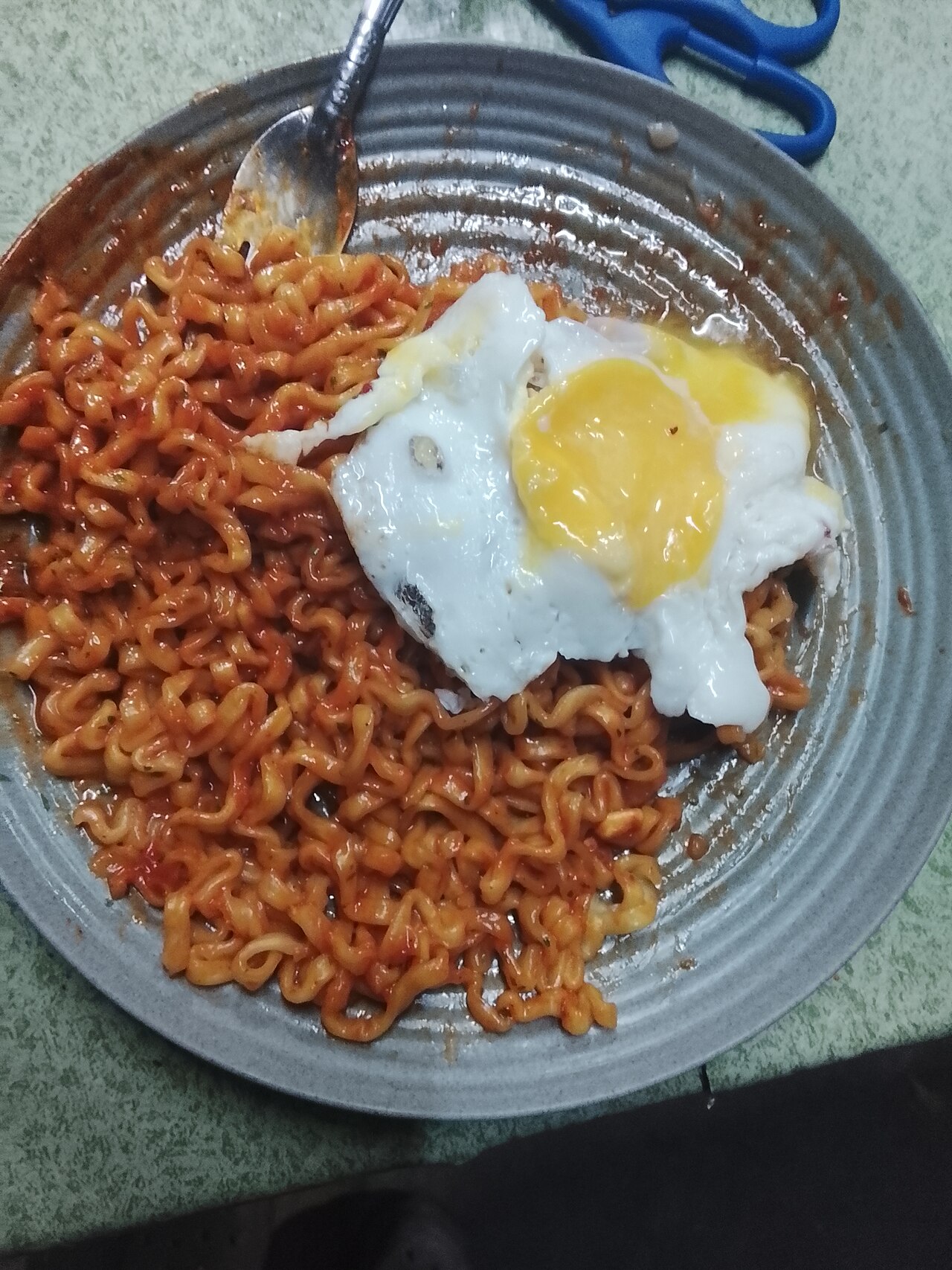
Buldak Carbonara topped with egg. Photo: Theycallmeshane / Wikimedia Commons, CC BY-SA 4.0
Which One Is Better for Beginners?
For most first-time buyers, start with Shin Ramyun. It has less heat and a familiar soup format, and it is easy to find at Walmart, Target, and Amazon.
Start with Buldak instead if:
- you already eat spicy food regularly
- you specifically want to try the "fire noodle" trend
- you prefer saucy pasta-style noodles to soup
If you want Buldak but are worried about the heat, Carbonara Buldak adds a creamy powder that softens the chili.
Watch: Shin Stir-Fry vs Buldak
Nongshim now makes a stir-fried Shin as well. This video compares that newer format with Buldak:
Who Should Buy Which?
Buy Shin Ramyun if you want:
- a classic Korean soup noodle
- the lowest price per bowl (bulk multipacks)
- a pantry staple you can make milder by using less soup base
Buy Buldak if you want:
- the hotter, viral stir-fried noodle
- no broth, with everything in a thick sauce
- several flavors to try (Original, Carbonara, 2x Spicy)
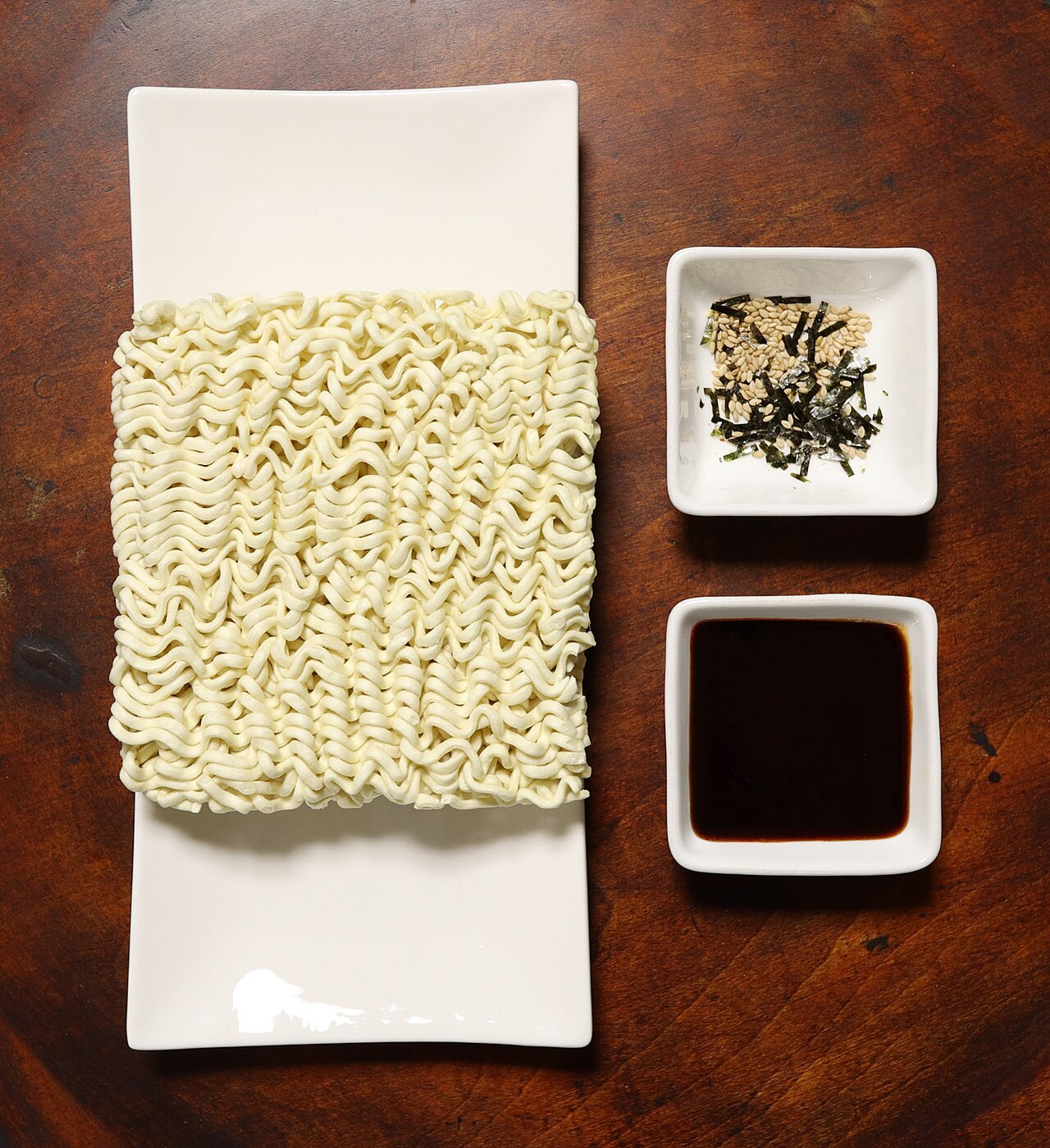
What is inside a Buldak packet: the noodle block, the liquid sauce, and the sesame-seaweed flakes. Photo: Mobius6 / Wikimedia Commons, CC BY-SA 4.0
Which One Is Better Value?
Going by the Amazon prices listed in October 2026, Shin Ramyun costs about $0.70 per packet in a 20-pack. Buldak Original costs about $1.50 per packet in a 5-pack. A Buldak packet is heavier (140 g vs 120 g), but per gram, Shin is still the cheaper option.
If you only want to try both once, buy one Buldak 5-pack and the smallest Shin pack you can find. Once you know which one you prefer, switch to the bulk pack.
Easy Add-Ins (From the Packaging and Common Recipes)
For Shin Ramyun
The US package itself suggests kimchi, mushrooms, cheese, or dumplings. An egg cracked into the broth during the last minute is another common addition.
For Buldak
A slice of cheese or a fried egg is the classic way to soften the heat. Dairy is also the reason Carbonara Buldak is milder.
Final Verdict
Choose Shin Ramyun for a cheaper, milder soup you can eat every week. Choose Buldak for a hotter, saucier noodle you might treat as a weekend dare. If you are unsure, buy one of each. Most Korean pantries keep both.
FAQ
Is Shin Ramyun better than Buldak?
Neither is better overall. Shin is a soup noodle and Buldak is a sauce noodle. Shin suits most beginners, and Buldak suits people who love heat.
Which is spicier, Shin Ramyun or Buldak?
Buldak Original, at about 4,404 SHU compared with about 3,400 SHU for Shin Ramyun.
How much sodium is in a whole packet of Shin Ramyun?
1,620 mg, or 70% DV. The label shows 810 mg because it counts half a bag as one serving.
Is Shin Ramyun sold in the US made in Korea?
The US package lists Nongshim USA in Rancho Cucamonga, California. Always check the origin line on the bag you actually receive.
Which Buldak should beginners try first?
Carbonara. Its creamy powder makes it milder than the Original.
Which one is cheaper on Amazon?
Shin Ramyun multipacks, at about $0.70 per packet compared with about $1.50 for Buldak (October 2026 listings).
Should I buy both?
If you are curious about both, yes. They cover different cravings, so buying one doesn't replace the other.
Sources
- Nongshim USA – Shin Ramyun Original nutrition and ingredients: https://nongshimusa.com/product-detail?pid=1
- Amazon – Samyang Buldak Original 5-pack listing: https://www.amazon.com/Samyang-Buldak-Chicken-Stir-Fried-Original/dp/B0BW6D5S6G
- Amazon search results for Shin Ramyun and Buldak multipack prices and ratings (October 2026)
- Buldak Original US Nutrition Facts (140 g bag: 560 kcal, 1,630 mg sodium), as published by Wegmans and Gopuff: https://www.wegmans.com/shop/product/946692-Spicy-Chicken-Flavor-Spicy-Ramen
- NoodleDex – Shin Ramyun vs Buldak (SHU, launch years): https://www.noodledex.com/guides/shin-ramyun-vs-buldak
- EpicKor – Korean ramyun heat chart (Shin SHU before and after 2017): https://www.epickor.com/ramyun
- City Market – Shin Ramyun package text ("2/3 or less of the soup base"): https://www.citymarket.com/p/nongshim-shin-ramyun-4f-pk-/0003114602286
- U.S. FDA – Daily Value for sodium (2,300 mg)
- Images: Wikimedia Commons (licenses shown under each photo)
Affiliate disclosure: As an Amazon Associate, radasong.com earns from qualifying purchases. If you buy through links on this page, we may earn a small commission at no extra cost to you. Prices and availability are accurate as of the date shown and may change.